
Case Of Complex Type 4 Paraesophageal Hernia
At Aadhar Hospital, we routinely manage complex and high-risk surgical cases with precision, compassion, and advanced medical technology. Recently, our expert surgical team successfully treated a 73-year-old patient diagnosed with a rare and complex Type IV paraesophageal (hiatal) hernia.
.jpg)
Patient Presentation
The patient presented to the emergency department with:
- Recurrent vomiting
- Severe epigastric pain
- Haemoptysis (coughing up blood)
- Symptoms persisting for the last 5 days
Clinical evaluation suggested a critical gastrointestinal obstruction, requiring immediate intervention.
Unlike common hiatal hernias, Type IV paraesophageal hernia is the most advanced and dangerous form, in which multiple abdominal organs migrate into the chest cavity through the diaphragmatic hiatus.
Advanced Diagnostics: Precision Mapping
To accurately assess the extent of the condition and plan a safe surgical approach, advanced diagnostic modalities were used.
- High-Resolution CT Imaging (MDCT)
A contrast-enhanced CT scan of the chest and abdomen revealed:
- Large mixed-type hiatal hernia
- Herniation of:
- Stomach
- Intra-abdominal fat
- Left half of the transverse colon
- Splenic flexure
- Upper Gastrointestinal Endoscopy (EGD)
Urgent endoscopy findings included:
- Large hiatal hernia
- Esophageal ulcer
- Duodenal nodule
Given the severity and risk of complications, the patient was shifted immediately for surgical management.
Surgical Management
Procedure Performed: Laparoscopic Nissen Fundoplication
The minimally invasive procedure included:
- Reduction of Hernial Contents
Careful repositioning of the stomach, colon, and omentum back into the abdominal cavity.
.jpg)
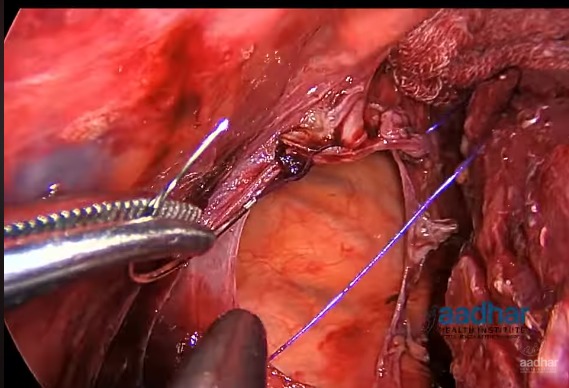
- Excision of Hernial Sac
Complete mobilization and excision of the hernial sac from the diaphragmatic hiatus. - Closure of Hiatal Defect
Secure closure of the diaphragmatic defect.
.jpg)
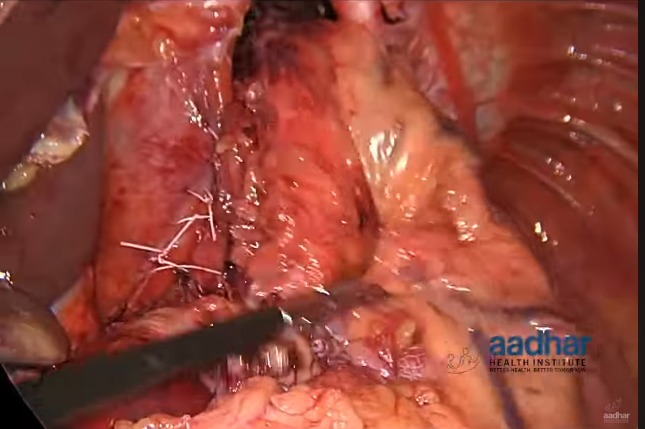
- Nissen Fundoplication
Anti-reflux procedure performed to prevent recurrence and restore normal anatomy.
Post-Operative Care
- Continuous monitoring in the ICU using real-time advanced monitoring systems
- Early mobilization under our Fast-Track Recovery Protocol
Outcome: A New Lease on Life
Despite advanced age and the involvement of multiple organs, the surgery was highly successful.
The patient experienced:
- Minimal post-operative pain
- Rapid recovery
- Complete resolution of symptoms
The patient was safely discharged within a few days, leading a comfortable and symptom-free life.