Surgical Oncology : A Case Of Recurrent Dermatofibrosarcoma Protuberans
Recurrent Dermatofibrosarcoma Protuberans (DFSP) of the Shoulder – A Successful Surgical Reconstruction Case
Introduction
Dermatofibrosarcoma Protuberans (DFSP) is a rare, slow-growing soft-tissue sarcoma known for its local aggressiveness and high recurrence rate. Early diagnosis and complete surgical excision are crucial for long-term control.
Here we present a case of recurrent DFSP of the shoulder, managed successfully through wide re-excision and complex reconstruction.
Case Overview
A 42-year-old male presented with a large recurrent swelling over his left shoulder for eight months. He was a known case of DFSP, previously treated with wide local excision in May 2002, 2022 & 2024 with reconstruction.
Clinical Presentation
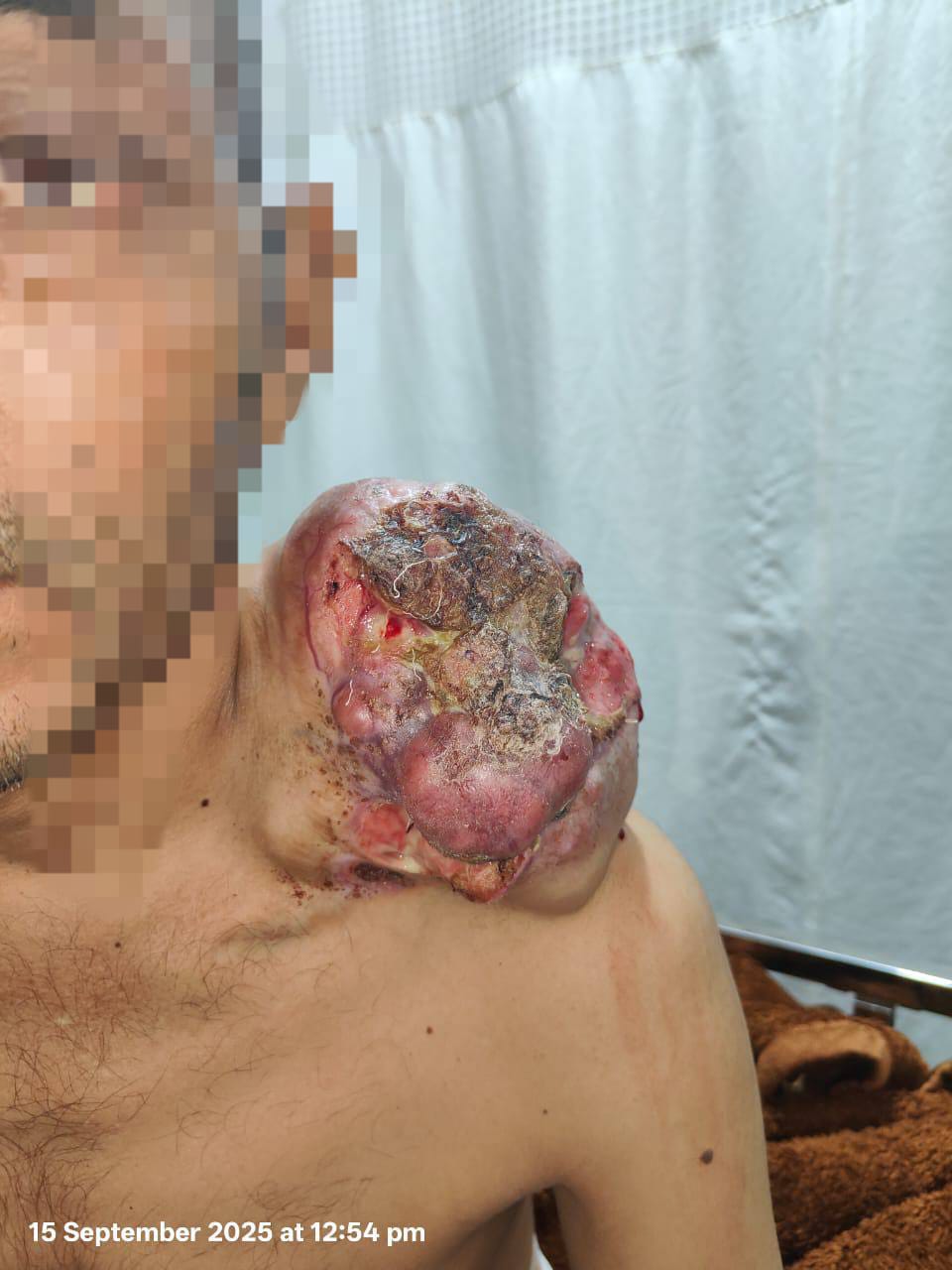
- Painless, hard, lobulated and fungating swelling over the old surgical scar.
- Gradual increase in size with ulceration, bleeding, and discharge.
- On examination: a 12 × 10 cm irregular, fixed mass with skin changes and reddish pigmentation.
Diagnostic Workup
- CECT Neck: Large ill-defined soft-tissue mass (12 × 11 × 10 cm) in the left lower posterior cervical and supraclavicular region, extending into underlying muscles and displacing the clavicle.
- Histopathology: Confirmed recurrent DFSP; immunoreactive for CD34, with Ki-67 and P53 (1+) expression.
Treatment Performed
- Surgical procedure:
- Wide local re-excision with 3 cm margins including fascia, muscle, and part of clavicle.
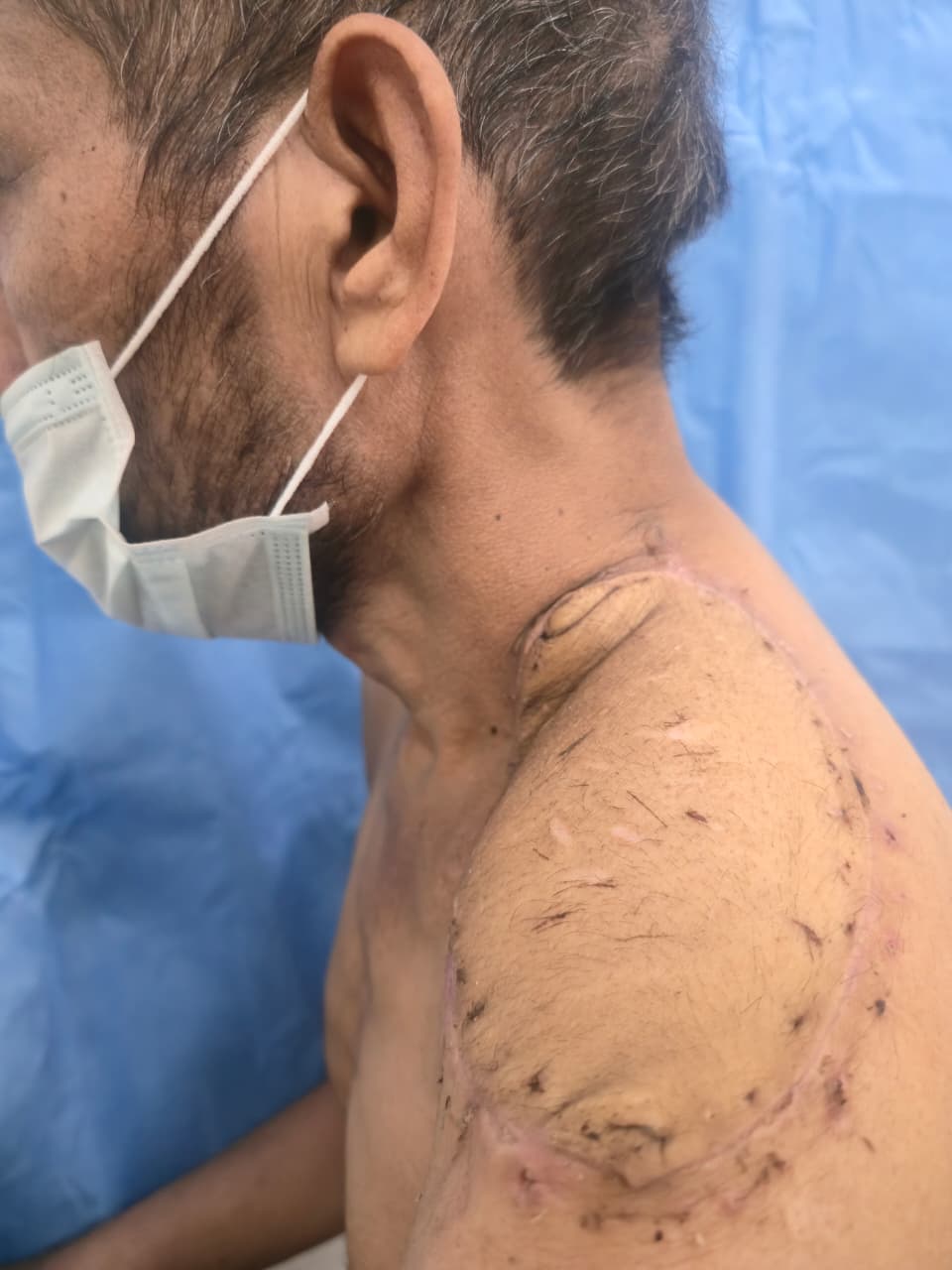
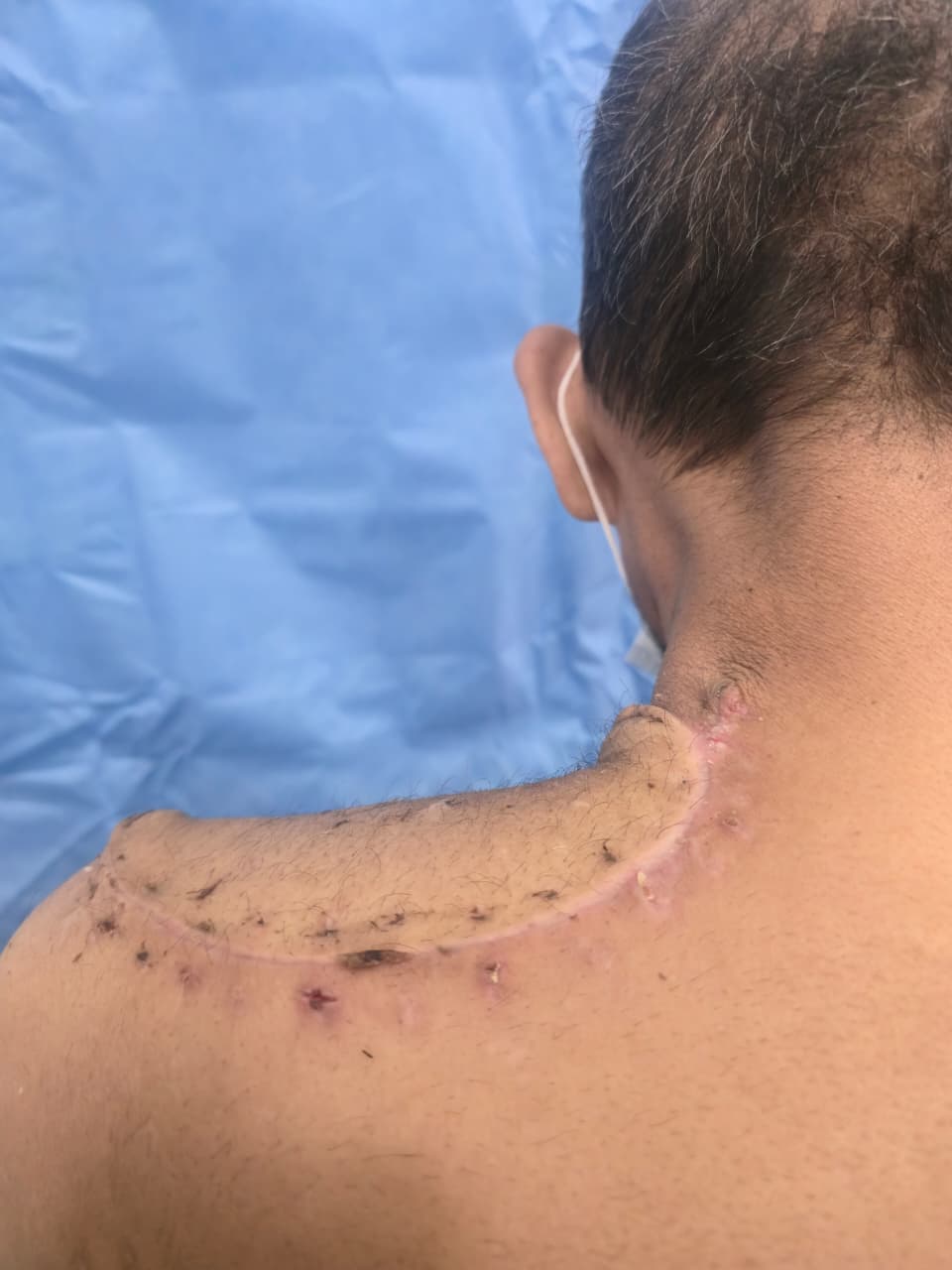
- Reconstruction using an Anterolateral Thigh (ALT) Free Flap) performed on 15 September 2025.
- Adjuvant therapy: Continued Imatinib 400 mg orally once daily along with External Beam Radiotherapy.
Postoperative Course
- Uneventful recovery with flap viability maintained.
- Drain and alternate sutures removed on postoperative day 11.
- Continued follow-up for adjuvant therapy, physiotherapy and rehabilitation.
Discussion
DFSP typically presents as a slow-growing dermal or subcutaneous mass that infiltrates surrounding tissues.
- The mainstay of treatment remains wide local excision or Mohs micrographic surgery with negative margins and reconstruction.
- Imatinib, a tyrosine kinase inhibitor, is beneficial in recurrent or unresectable cases.
- Multidisciplinary planning is essential for achieving both oncologic clearance and functional reconstruction.
Outcome
The patient recovered well, with no postoperative complications and an excellent functional and aesthetic result of the shoulder region.
Pre-Operative Images: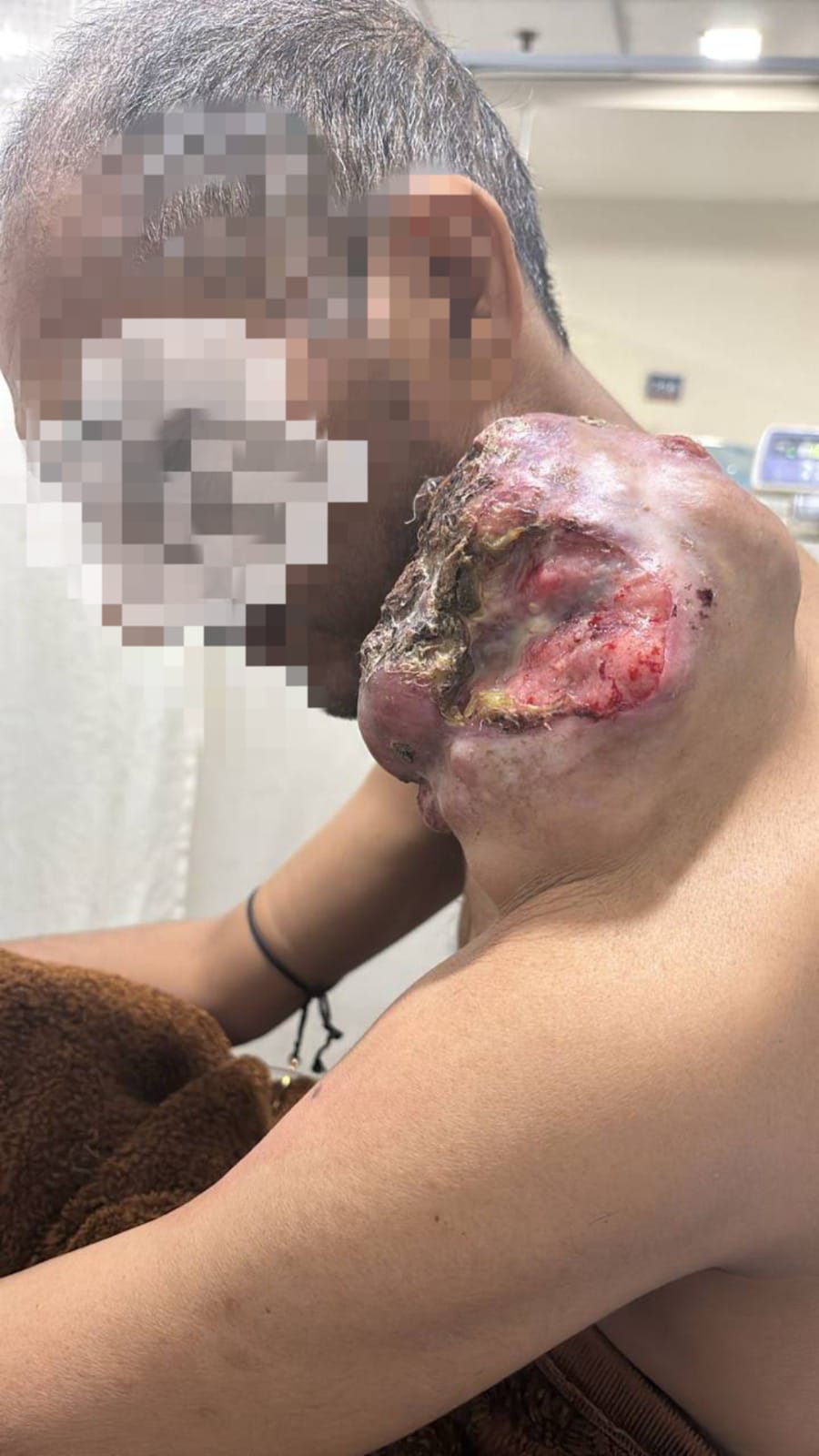
Post-Operative Images: