Award-Winning Presentation: Case Report on Large Diaphragmatic Hernia in an Adult
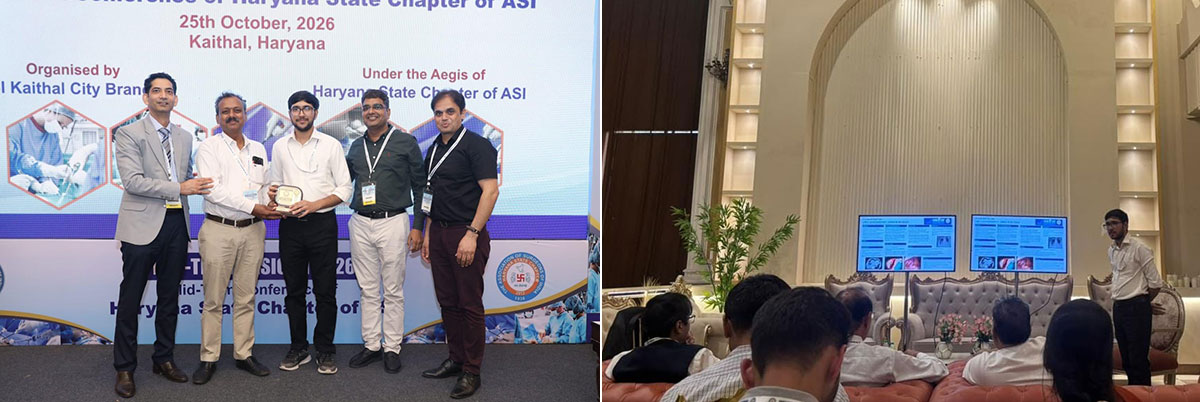
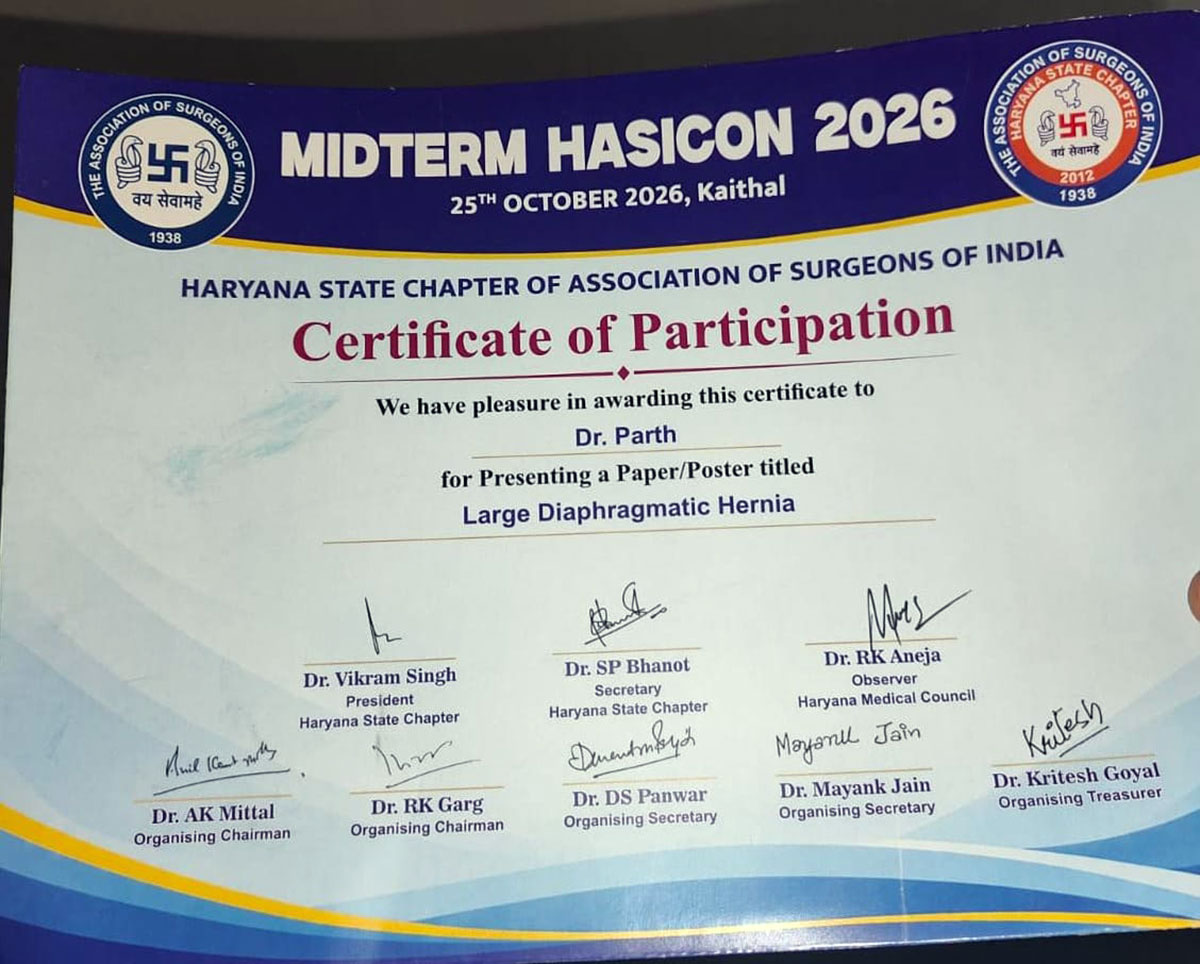
Aadhar Health Institute proudly announces that our clinical research poster presentation titled "A Case Report on Large Diaphragmatic Hernia in an Adult" secured Second Prize at the prestigious Midterm HASICON 2026, held on October 25, 2026, in Kaithal.
Authored by our expert surgical team—Dr. Parth Patel, Dr. Harish Sharma, Dr. B. B. Banga, Dr. Shayan, and Dr. Yash—this recognition highlights our ongoing commitment to surgical excellence, diagnostic precision, and advanced clinical care.
Introduction & Clinical Significance
A diaphragmatic hernia involves the migration of abdominal viscera into the thoracic cavity through a defect in the diaphragm, with the Bochdalek (posterolateral) variant being the most common congenital type. While predominantly diagnosed in neonates, late presentation in adulthood is rare. Right-sided adult presentations are exceptionally uncommon (accounting for only 10–20% of cases) and typically involve liver herniation.
Because symptoms are often non-specific, right-sided lesions frequently manifest primarily with respiratory complications, easily mimicking primary pulmonary diseases and creating a diagnostic challenge.
Case Summary
- Patient Profile: A 64-year-old male presenting predominantly with respiratory symptoms rather than primary abdominal complaints.
- Clinical Evaluation: Examination revealed markedly decreased breath sounds across the right lower and middle chest zones. Following comprehensive cardiology and pulmonology evaluations, the patient was scheduled for surgical intervention.
- CT Chest Findings: Revealed a massive $12.8 imes 14.3 ext{ cm}$ defect in the right diaphragm, with superior migration of the liver, gallbladder, stomach, duodenum, and large bowel loops. Findings also demonstrated significant mass effect with a left mediastinal and cardiac shift, along with diffuse emphysematous lung changes.
Surgical Management & Hospital Course
- Operative Approach: Initiated via minimally invasive techniques, the procedure was converted to a posterolateral thoracotomy due to dense visceral adhesions. The abdominal contents were gently reduced under direct vision, and the large defect was successfully repaired using a $25 imes 25 ext{ cm}$ Prolene mesh secured with continuous Ethibond sutures.
- Postoperative Recovery: Managed intensively in the Surgical ICU (SICU) with mechanical ventilation, inotropic support, targeted respiratory antibiotics, and aggressive chest physiotherapy in close coordination with the pulmonology and cardiology departments.
Key Takeaways
- High Index of Suspicion: Large right-sided adult diaphragmatic hernias can present primarily with respiratory distress and mimic primary pulmonary pathology.
- Diagnostic Precision: Advanced cross-sectional imaging (CT chest) is crucial for mapping defect dimensions and herniated contents.
- Multidisciplinary Care: Due to long-standing lung compression and coexisting pulmonary conditions, early pulmonology integration and meticulous ICU management are vital for successful recovery.